Search for IPTV in the UK and you’ll find offers that look too good to be true: a year for £15, “lifetime access” for £30, unlimited screens for a fiver. Some people get lucky. Most find out the hard way, usually on a busy Saturday evening when the stream freezes and the seller has stopped replying.
Cheap isn’t automatically bad, and expensive isn’t automatically good. But there’s a realistic price floor below which a provider can’t run a reliable service. Here’s how to spot the difference.
Why very cheap IPTV usually fails
Running an IPTV service costs real money: servers, bandwidth, TV guide data, payment processing and people to answer support messages. Every viewer watching a 4K stream uses a steady slice of bandwidth, and that bandwidth has to be paid for.
When the price drops below a certain point, something has to give. It’s usually one of three things:
- Oversold servers. Far more customers than the servers can handle. Fine at 11am on a weekday, unwatchable at peak times.
- No support. Nobody is paid to help you, so problems never get fixed.
- No future. The service takes as many annual payments as it can, then disappears.
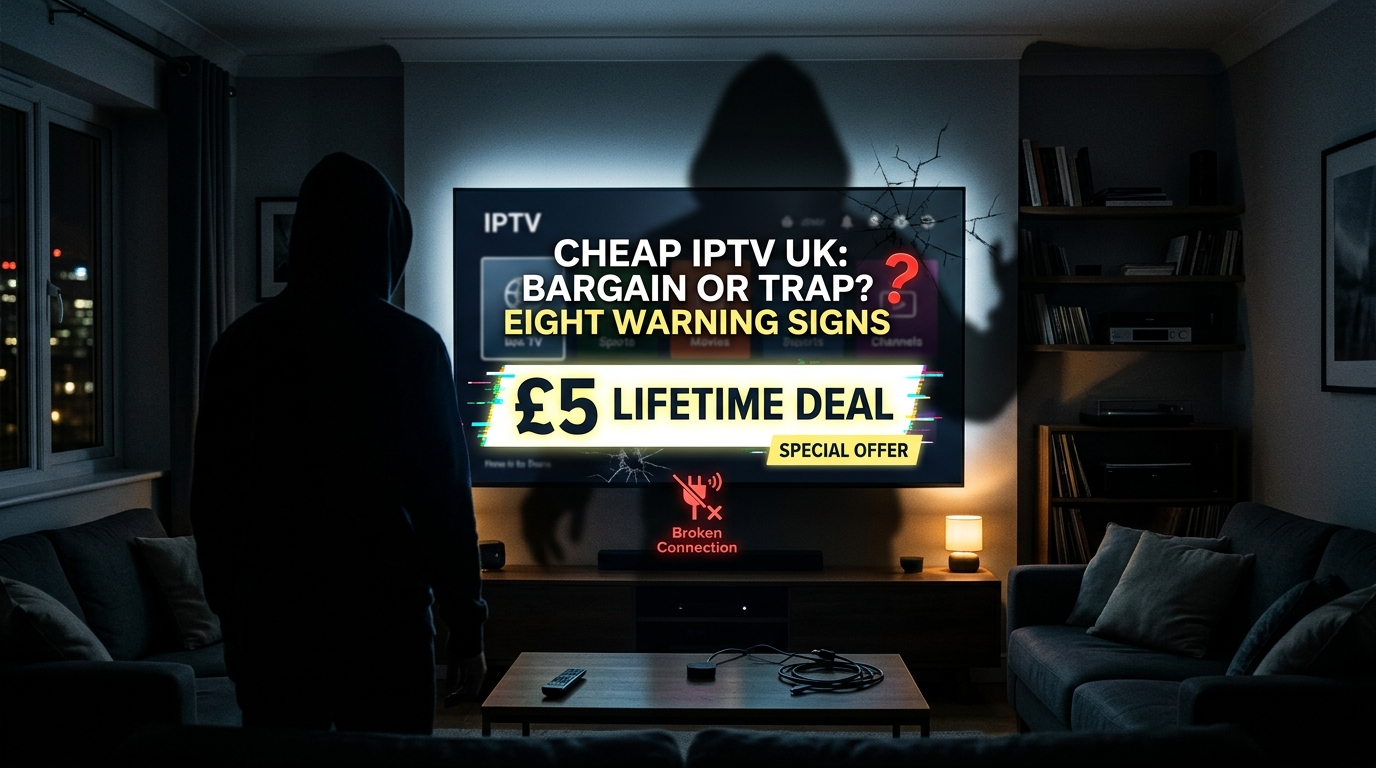
The eight warning signs
1. “Lifetime” subscriptions
No IPTV service can promise to run forever for a one-off £30. Lifetime deals are the clearest sign that a seller is planning to collect money, not run a service. When it closes, and they usually do, there’s nobody to ask for a refund.
2. Prices below about £3 a month
On an annual plan, around £4 a month is a realistic floor for a provider running proper servers with support. Anything under £3 a month usually means one of the problems above.
3. “Unlimited connections”
Every extra screen costs the provider bandwidth. A plan that allows unlimited simultaneous streams for a low price is almost always being resold and shared beyond what the servers can cope with.
4. No way to talk to a person
If the only contact option is a web form, or a Telegram account with no name, think about what happens when something goes wrong. A good provider makes it easy to reach them, ideally on WhatsApp or live chat with published hours.
5. No refund policy, or a vague one
“All sales final” or “refunds at our discretion” means you have no protection. Look for a specific window, such as 7 days, written down on the website.
6. Pressure tactics
Countdown timers, “only 3 spots left” and “price rises tonight” are designed to stop you comparing providers. A service confident in its quality lets you take your time and will usually offer a demo.
7. Copied or too-perfect reviews
Hundreds of five-star reviews that all sound the same, with no names or dates, are a red flag. Real reviews mention real details: the device someone uses, a problem that was fixed, a small complaint. Search a sentence from a review; if it appears word for word on other websites, it isn’t genuine.
8. Unusual payment methods only
Being asked to pay only with gift cards, or by bank transfer to a personal account with no receipt, leaves you with no protection if things go wrong. Legitimate providers give you a clear receipt and, ideally, a payment method with some buyer protection.
What does a realistic price look like?
Here’s roughly what UK viewers pay for a well-run IPTV service in 2026:
| Plan length | Realistic total | Per month |
|---|---|---|
| 1 month | £15–£25 | £15–£25 |
| 3 months | £25–£40 | £8–£13 |
| 6 months | £35–£50 | £6–£8 |
| 12 months | £45–£60 | £4–£5 |
Longer plans cost less per month because the provider has less admin and more certainty. That’s genuine value. A £15 lifetime deal isn’t.
For comparison, our own plans are £19.99 for one month and £49.99 for twelve (about £4.17 a month), with the full lineup on every length.
What genuine value looks like
The cheapest plan and the best-value plan are rarely the same thing. Good value means:
- The full lineup on every plan. No add-ons to unlock sport or 4K.
- Published uptime and UK/EU servers. Numbers, not slogans.
- Fast, human support. Replies in minutes during published hours.
- A written refund window. So trying a service carries very little risk.
- No auto-renewal surprises. You choose when to renew.
- A demo or a short first plan. Try it at a busy time before committing to a year.
The safest way to try a provider
If you’re not sure about a provider, don’t start with a year. Buy the shortest plan, test it properly, then commit.
- Buy one month, or ask for a live demo first.
- Test at peak time. Saturday afternoon or a big evening event is the real test.
- Contact support with a simple question and time the reply.
- Check the TV guide, catch-up and on-demand sections.
- If it passes, switch to a longer plan to get the lower monthly price.
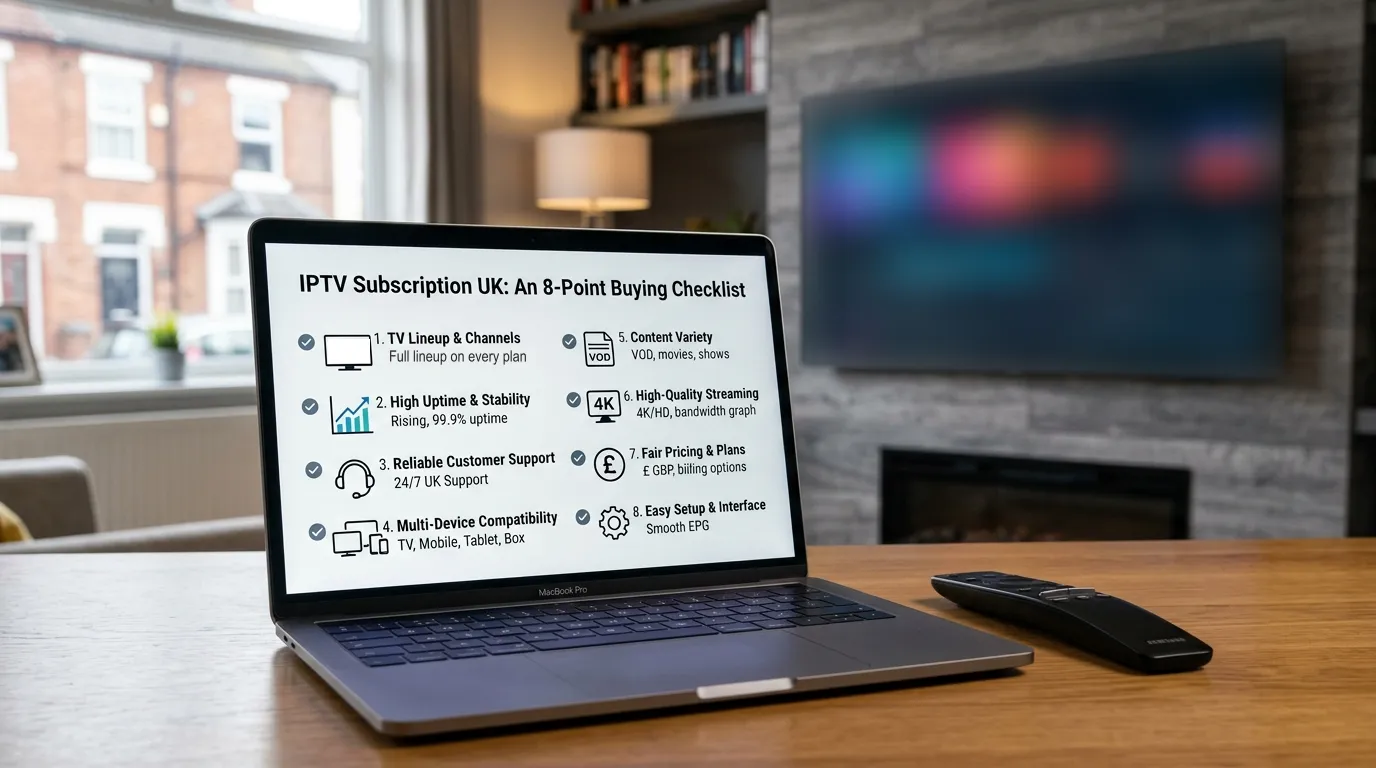
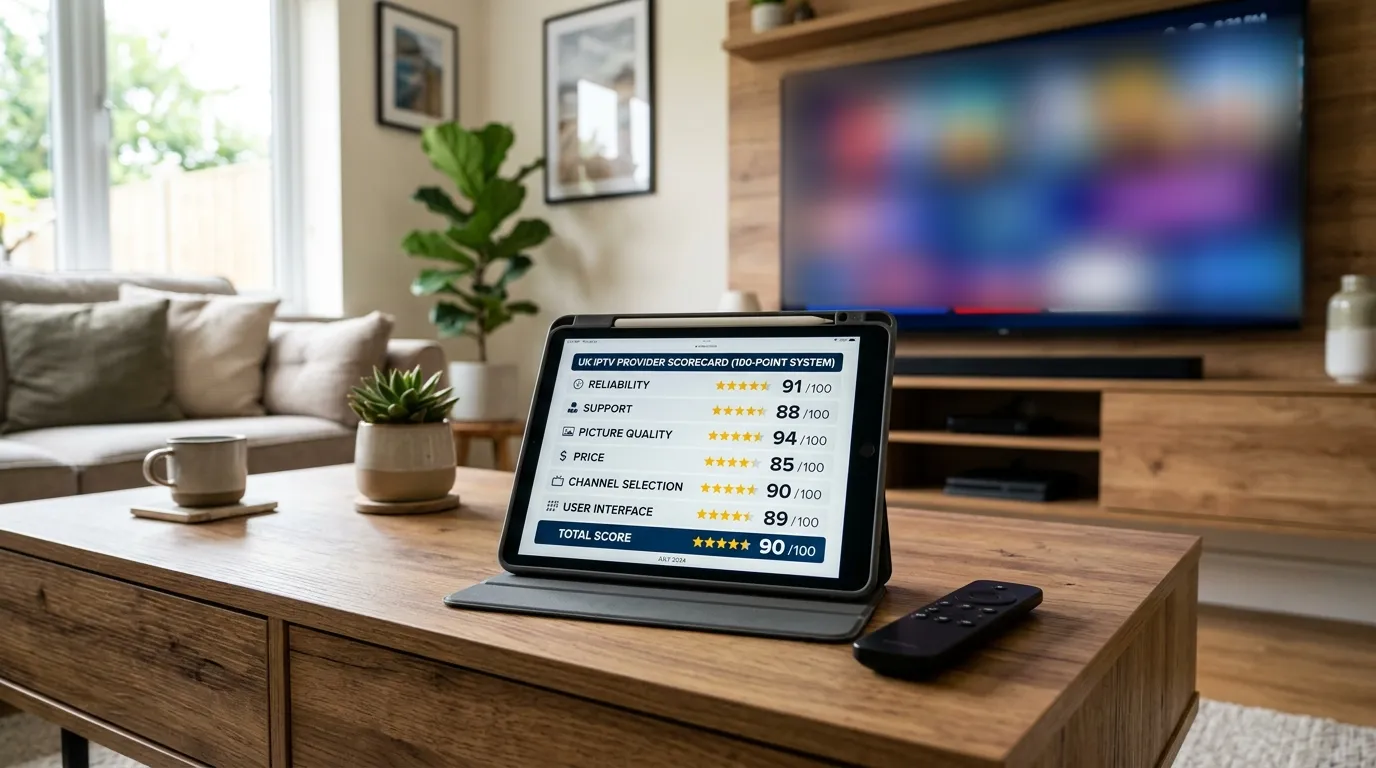
Our 8-point buying checklist goes through each of these checks in detail, and our provider scorecard helps you compare several services fairly.
The bottom line
A low price is only a bargain if the service still works when you need it. Avoid lifetime deals, unlimited-screen offers and sellers you can’t contact. Pay a fair price to a provider that publishes its uptime, answers messages and puts its refund promise in writing, and start with a short plan so you can see for yourself.